Reading time:
8 min
Owning the client experience
Firms are white-labelling AI to own the client experience - keeping their brand front and centre while tech quietly powers it underneath.

Article written by
Shawn Curran

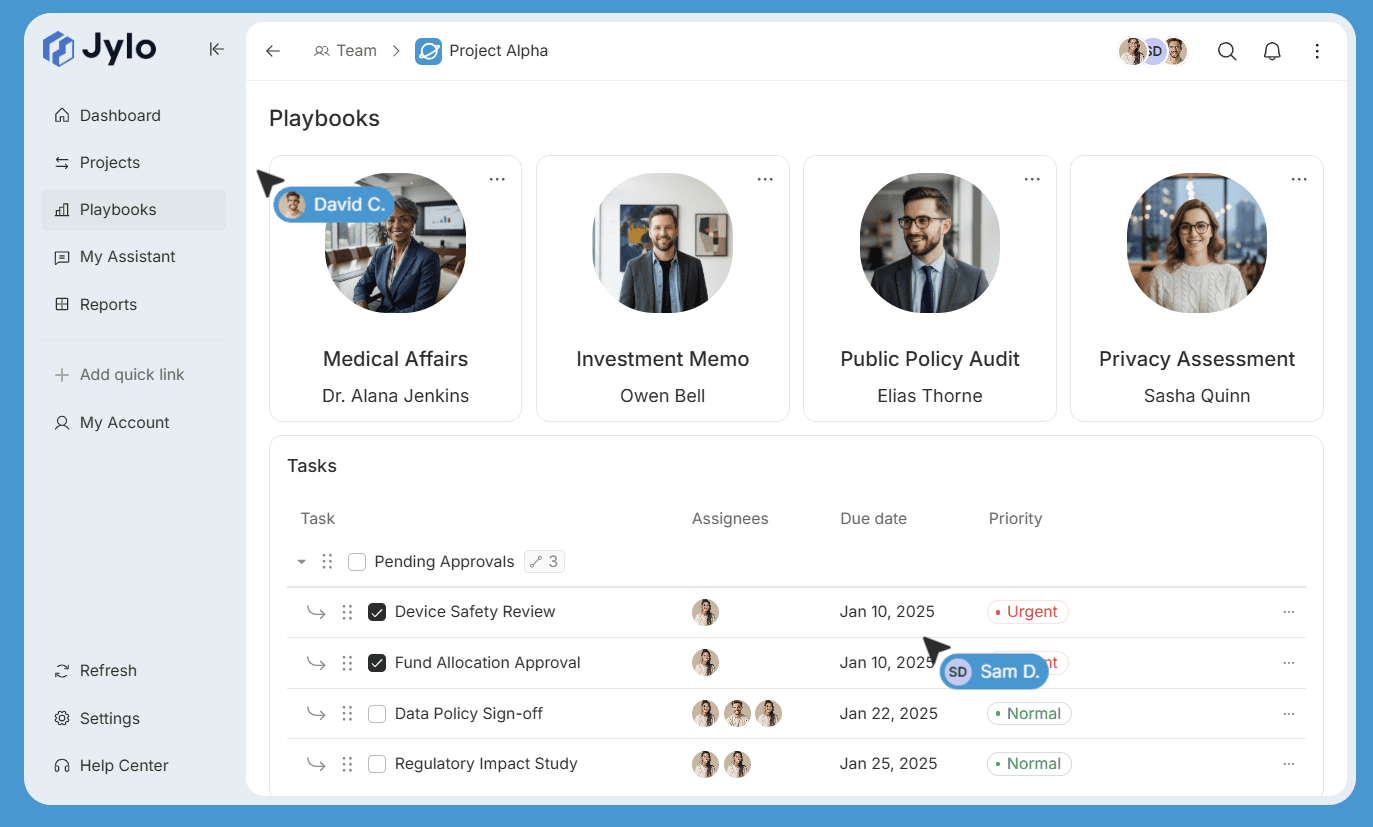
There’s something we’ve been noticing more and more with some of our customers. When firms roll out Jylo internally or to clients, they don’t want it to feel like they’ve plugged in someone else’s product. They want it to feel like theirs. So they change the branding, swap out our logo - and what the client sees is something that looks and feels like it’s been built by the firm itself. From our side, that just makes sense and we're happy to support it.
A lot of this comes down to where client relationships now live. Increasingly, it’s inside portals - spaces where clients interact with their lawyers, access documents, and get answers. If that experience is branded by a third party, it can create a bit of distance. The firms we work with don’t want to be a middle layer between their client and a tool. They want to own that interaction fully, so the experience feels direct and consistent.
We also see a shift in how firms think about the role of technology in general. It’s less about showcasing the tools they’ve bought and more about how the end result lands with the client. No client is asking which model is running in the background or who built the interface. They care that it works, that it’s clear, and that it reflects the firm they’ve chosen to work with. So naturally, firms increasingly want their name on their AI platform.
Under the hood, things have become much more flexible, which helps. The models, the infrastructure, and the interface don’t all have to come as one package anymore. That gives our customers the freedom to shape the experience in a way that fits them, while still relying on us to power it behind the scenes.
For that to work, there has to be trust on both sides. Our customers need to know we’re not trying to step into their relationship with their clients, and we need to be comfortable being in the background. That alignment is actually one of the reasons white-labelling works so well. It removes any ambiguity about who owns the client experience.
We’re also seeing more firms think carefully about where the technology sits. Some are perfectly happy with managed environments, others want deployment in their own cloud or a more private setup. It’s often driven by internal stakeholders as much as anything else - data teams, risk, compliance. Even when there’s trust, having that extra level of control can make adoption much easier.
As the line between product and service gets thinner, firms are delivering advice through interfaces that feel like products, and those products are becoming part of their identity. In that world, it’s only natural that they want to own the brand that sits in front of the client.
If the technology is doing its job properly, it should disappear into the experience. And if our customers want to put their name on that experience and make it their own, we think that’s exactly the right instinct.
Article written by
Shawn Curran
AI that remains yours
Capture expertise and eliminate rework across your organisation.