Reading time:
8 min
The Legal Tech Industry Is Underestimating Vibe Coding Lawyers
Vibe coding lawyers aren’t a joke. They’re a real threat to legal tech SaaS, as firms build safer, cheaper tools tailored to their own workflows.

Article written by
Shawn Curran

Vibe Coding Lawyers Are Not a Joke
“Vibe coding lawyers” has become the latest talking point in legal tech. And almost on cue, we’re seeing the usual defensive reaction from founders of legal tech companies: it won’t be safe, it won’t be secure, it won’t be enterprise-grade.
Some of those concerns are valid. Someone will eventually install a package with a vulnerability, call an unsafe endpoint, or ship something half-baked. But here’s the uncomfortable truth: that already happens when humans code professionally. It always has.
The more fundamental idea being dismissed - that a domain expert who deeply understands a process can build software - is what’s truly ridiculous. And ignoring it is almost certainly a major strategic mistake.
The Squeeze: Heavily Funded SaaS vs. Internal Build
At Jylo, we’re sandwiched between two forces.
On one side, there are legal tech companies that have raised billions to build SaaS products that, if they’re lucky, might grow into a total addressable market in the low hundreds of millions.
On the other side, there’s a growing cohort of “vibe lawyers” within law firms. Senior actively practicing lawyers who are increasingly comfortable encouraging their firms to ditch eye-wateringly expensive tools and instead build more targeted systems that fit their actual internal workflows.
That second force is only getting stronger.
Who Is Actually Qualified to Build Legal Tech?
It’s worth asking an uncomfortable question: who says today’s legal tech founders are more qualified to build legal software than senior lawyers inside top firms?
If you look at recent YC batches and the broader ecosystem, many legal tech founders:
Have zero legal domain expertise, or
Are ex-lawyers with <5 years PQE who never had to think about the full enterprise tech ecosystem of a law firm.
Compare that to a 20-year PQE partner at a top-tier firm who has lived the workflows, incentives, risk profile, and operational complexity of legal services for decades. If those lawyers end up vibe coding - it’s not obvious who the “amateur” is here.
Law Firms Already Have the Infrastructure
Put IP aside for a moment.
Most large law firms already have:
Internal developers
Infrastructure and security teams
Code scanning, deployment, and maintenance capabilities
A history of building internal systems
The idea that law firms are suddenly incapable of managing software risk doesn’t hold up. What is new is the democratisation of development across the firm - and that’s the real shift. The surface area of who can build is expanding rapidly, and that trend isn’t reversing.
Lawyers Are Not the Weak Link
There’s also a persistent myth that lawyers somehow aren’t suited to this.
Having worked at top tier law firms for over two decades - I’ve seen the opposite.
Three observations stand out:
Lawyers work harder than almost anyone.
I still remember a litigation partner at one firm walking the corridor at 11pm asking the Associates to focus because he “wanted to get out early tonight.”Their attention to detail is exceptional.
Lawyers are insecure overachievers with an eye for quality. That matters enormously when building systems that encode process.The lawyer–engineer translation gap is real.
Product requirements get lost. Output drifts. Quality degrades unless the engineers are exceptional. At Jylo, we deliberately run a very small team of exceptional engineers because average simply wouldn’t do.
So when VCs talk about the difficulty getting startups to follow the “9-9-6 (hours) culture” whilst handing them $50m with no domain experience to “disrupt legal” - it’s hard not to notice the irony.
Engineering Has Always Been About Abstraction
Engineering has always been abstraction.
C developers thought C++ developers were idiots
C++ developers thought C# developers were idiots
C# developers thought Python developers were idiots
For example, garbage collection abstracted away memory management - and enormous companies were still built by people who never understood it deeply
Abstraction means people who come later benefit from those who came before.
When we talk about “lawyers vibe coding,” let’s be honest about what’s actually happening. Libraries like Aspose (doc production) are already extremely abstract and easy to implement. You’re rarely writing custom algorithms from scratch. You’re making type-safe calls into well-documented APIs. (for the non-techy, think ready made meal versus measuring the ingredients).
And let’s not pretend engineers fully understand every library they use. Ask engineers if they truly understand Regex. The honest ones will tell you they copy-paste patterns from Google and hope for the best.
There are simply too many libraries to deeply understand them all - and that was true before vibe coding. Lawyers are not starting from zero. They’re starting from a very strong foundation.
Price, IP, and Incentives Matter More Than Fear
Where this really gets interesting is price and IP.
If software is too expensive and there’s no alternative, firms will build.
Partners prefer to buy - but only with strong IP assurances.
No training on customer data. No reuse. No ambiguity.
At Jylo, we offer unlimited liability on customer data use, while most vendors cap liability at 2x fees. We also support private-cloud deployment where Jylo has no access at all.
Pricing matters too. Your licence fees must support a sustainable business, but it must also be priced to discourage internal build. Partners don’t want focus drifting away from the core legal services business, but they also don't like expensive line items on the business services budget.
There’s also a human incentive problem. Associates who vibe code shouldn’t be pushed out of practice. The ideal model is one where the best vibe coders continue progressing toward partnership, doing different kinds of work along the way. Otherwise, internal products stagnate at trainee-level tasks and never scale to partner-level value.
Why This Matters to Jylo
At Jylo, we don’t see our biggest threat as heavily VC-funded AI companies that bought revenue with unsustainable customer acquisition costs.
We believe the bigger threat to our business will eventually come from vibe coding inside law firms themselves.
That’s why our focus over the next twelve months is clear:
Keep pricing competitive with internal build
Offer iron-clad IP guarantees, including private-cloud isolation
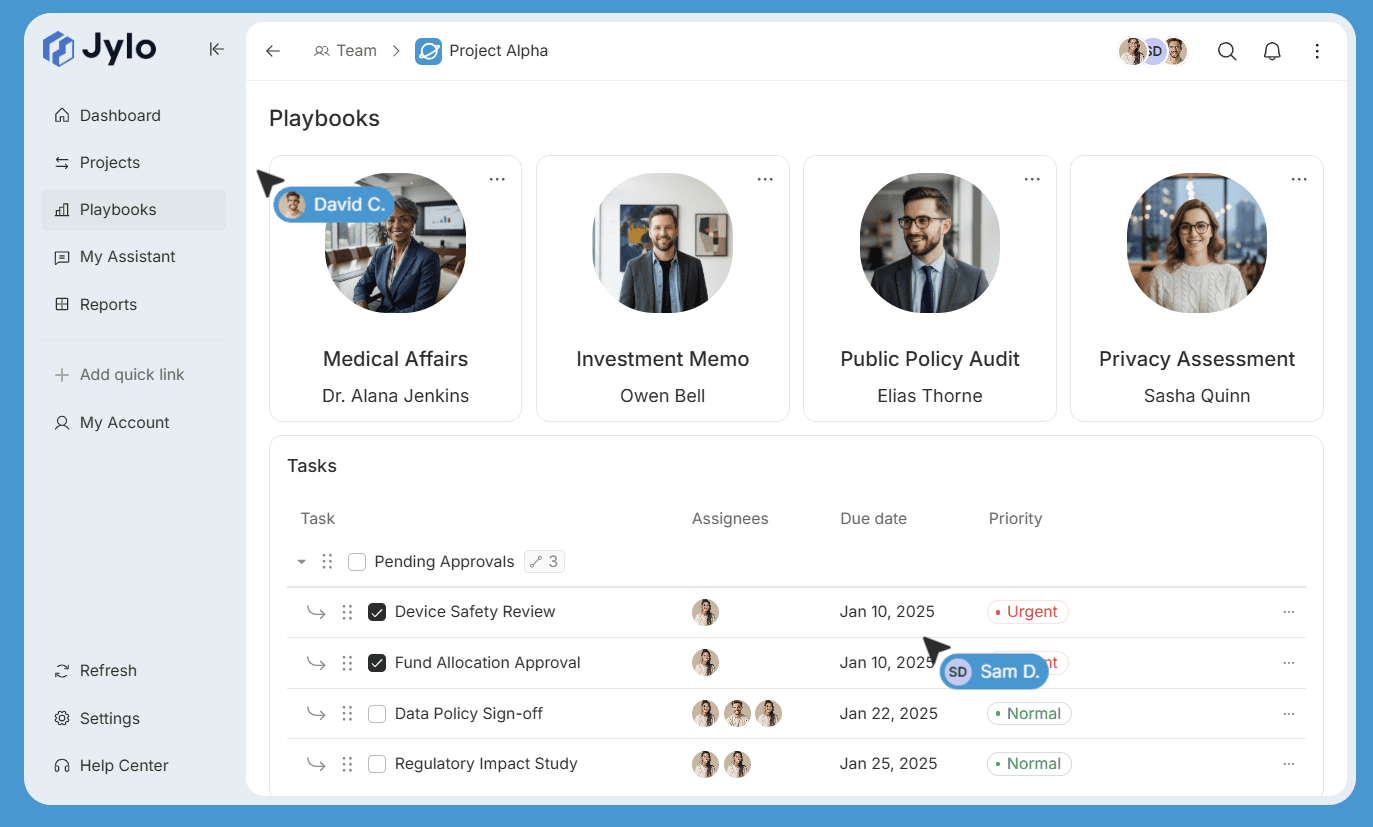
And most importantly: continue to embed safe, secure vibe-coding capabilities directly into Jylo Playbooks
The future isn’t lawyers versus software vendors.
It’s lawyers building either software engineering or legal engineering with vendors that help them do it safely, securely, and at scale.
Article written by
Shawn Curran
AI that remains yours
Capture expertise and eliminate rework across your organisation.