Reading time:
8 min
Vibeshoring: The Next Evolution of Software Development?
Vibeshoring pairs junior developers with AI to build real production features - challenging the idea that experience alone drives software innovation.

Article written by
Sam Lansley
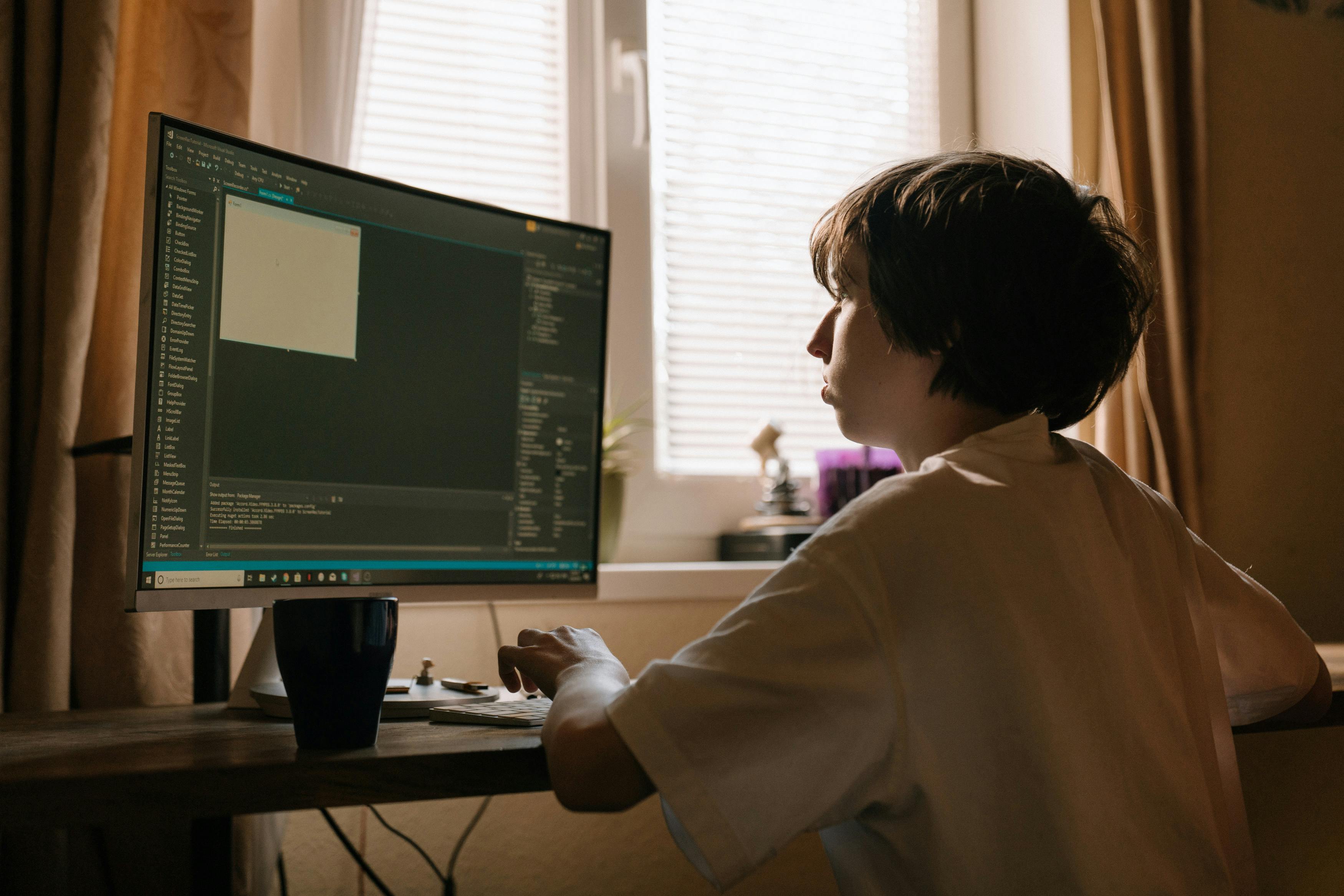
There’s a lot of noise right now about “vibe coding.” Some people believe it’s the inevitable future of software development, while others see it as reckless and dangerous. At Jylo, we’ve taken a different approach: instead of debating it abstractly, we’re experimenting with it in production. What we’re finding is that the conversation may be missing a key idea - what I’d call vibeshoring: combining junior talent with advanced AI tools to produce real, scalable software.
For context, we recently had an intern who had just finished their computer science degree at St Andrews. In previous generations, during their internship they might have been limited in what they could meaningfully contribute to a production system. Stack Overflow was powerful, but it didn’t understand user requirements, orchestrate solutions, or iterate on problems in real time. Today’s tools can do all of that. The intern effectively had a capability layer that allowed them to move far beyond what a junior developer could traditionally do - provided someone helped orchestrate the process and validate the results.
In the past two weeks alone, two features in Jylo were largely built through this model. The first was our Advanced Export functionality in Assistant. We knew the documentation for the Aspose library was strong, and the document production process itself is highly abstracted within this SDK. In many ways, libraries like Aspose are only one step away from no-code tooling: you’re writing code, but the abstractions are so well defined that the system becomes composable. With AI guiding implementation, iteration, and testing, the feature came together quickly and to a really high standard.
The second feature went a little deeper technically: a new playbook metadata system that allows customers to customise metadata to organise their playbooks. This required schema changes and integration with our existing UI framework (Material UI). It wasn’t just plugging into a well-documented library; it involved data modelling, UI patterns, and filters. Still, the feature was built successfully. Along the way, we discovered some issues - formatting quirks in the export functionality and the realisation that boolean metadata filters aren’t nearly as useful as enumerations with defined values - but these were resolved through iteration and review.
What’s important is that these weren’t toy projects or internal experiments. These features are now live in a production system used daily by thousands of people. They scale, they function reliably, and they were created largely by someone early in their career using AI as an amplifier. This potentially challenges long-held assumptions in software development: that junior developers can’t meaningfully contribute to complex systems without years of experience.
This is where the idea of vibeshoring starts to matter. Traditionally, companies talk about offshoring or onshoring talent. But AI introduces a third dimension: capability amplification. You can hire junior developers - whether local, remote, or global - and equip them with tools that dramatically increase their output and learning speed. Instead of replacing talent, AI may change the composition of teams. We might see fewer large groups of senior engineers and more juniors who can move fast, with a smaller number of experienced individuals validating architecture, security, and quality.
There’s also an orchestration challenge here that’s easy to underestimate. Vibe coding isn’t just “ask AI and ship.” Someone still needs to translate user requirements into prompts, evaluate outputs, run code scans, catch security issues, and ensure the system is maintainable. Senior engineers often have an advantage here - they can reduce trial and error and guide the process more efficiently. But equally, juniors who are curious, persistent, and willing to “run through walls” can accelerate their learning dramatically by using AI to understand why something failed and how to fix it.
The bigger picture is that vibeshoring could reshape how companies think about talent pipelines. In a world of geopolitical tech fragmentation and sovereign AI requirements, organisations may want development capacity that is both local and highly productive. AI-enabled juniors offer an intriguing path: people who can learn rapidly, ship meaningful work, and grow into deeper expertise while contributing immediately.
It’s still early, and we may discover that vibeshoring is simply the next evolution of the classic intern program rather than an entirely new paradigm. But the results we’re seeing suggest something more significant is happening. When junior developers are paired with advanced AI systems and a thoughtful review process, the gap between potential and production is shrinking fast. And that might be one of the most important shifts happening in software development today.
Article written by
Sam Lansley
AI that remains yours
Capture expertise and eliminate rework across your organisation.